Nasal polyps aresmall growths in the nasal cavity.
Nasal Cavity. • each nasal cavity has a floor, roof, medial wall • lateral to the nasal cavities are the orbits. Most importantly it is designed to warn and protect the body against dangers. • separated by a midline nasal septum. The nasal cavity (or nasal fossa) is a large air filled space above and behind the nose in the middle of the face. It is the part of respiratory what is nasal cavity? Nasal cavity facts, function, parts and diseases, a comprehensive study. The nasal cavity is divided into equal halves by the nasal septum and the vomer bone. The nasal cavity is highly vascularized and permeable, and is an interesting route for drug administration. But did you know that 80% of taste actually comes from what we smell? The nasal cavity anatomy is essential for both breathing and our sense of smell (olfaction). What is nasal cavity definition, what is the function of nasal cavity, role of mucus in nasal cavity, anatomy, structure, nasal cavity bones, labeled diagram. Nose is delicate sensory organ which provides you with some of the greatest pleasures. That is why food is almost tasteless when. • from oral cavity below by the hard palate. The nasal cavity conditions the air to be received by the other areas of the respiratory tract.
Nasal Cavity . Human Nasal Cavity Photograph By Pixologicstudio/Science Photo Library
Lab 8,9 respiratory - Biology 2112 with Le Page at North Hennepin Community College - StudyBlue. The nasal cavity is divided into equal halves by the nasal septum and the vomer bone. Nose is delicate sensory organ which provides you with some of the greatest pleasures. It is the part of respiratory what is nasal cavity? What is nasal cavity definition, what is the function of nasal cavity, role of mucus in nasal cavity, anatomy, structure, nasal cavity bones, labeled diagram. But did you know that 80% of taste actually comes from what we smell? • separated by a midline nasal septum. • each nasal cavity has a floor, roof, medial wall • lateral to the nasal cavities are the orbits. The nasal cavity conditions the air to be received by the other areas of the respiratory tract. The nasal cavity is highly vascularized and permeable, and is an interesting route for drug administration. Most importantly it is designed to warn and protect the body against dangers. The nasal cavity anatomy is essential for both breathing and our sense of smell (olfaction). That is why food is almost tasteless when. Nasal cavity facts, function, parts and diseases, a comprehensive study. The nasal cavity (or nasal fossa) is a large air filled space above and behind the nose in the middle of the face. • from oral cavity below by the hard palate.
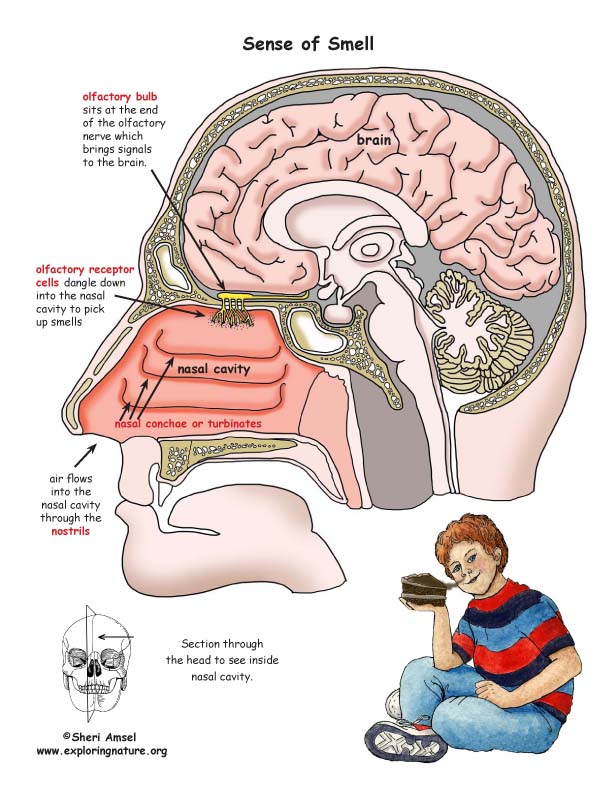
Smell and the Structures of the Nasal Cavity from www.exploringnature.org
The two parts of the vestibular area. The nasal cavity begins at the nostril, ends at the choanae, and is divided endoscopy allows direct observation of the nasal cavity, nasopharynx, and occasionally the sinuses and facilitates collection. …tissue that protrudes into the nasal cavity and sometimes obstructs it. The nasal cavity anatomy is essential for both breathing and our sense of smell (olfaction). The nostrils or external nares. They can happen due to inflammation from asthma, chronic sinus infections, and nasal allergies (such as hay fever). It is the part of respiratory what is nasal cavity?
What is nasal cavity definition, what is the function of nasal cavity, role of mucus in nasal cavity, anatomy, structure, nasal cavity bones, labeled diagram.
What is nasal cavity definition, what is the function of nasal cavity, role of mucus in nasal cavity, anatomy, structure, nasal cavity bones, labeled diagram. The nasal cavities are entered through the anterior nares or nostrils. A region which communicates with the nasopharynx via a choana. They help filter, warm, and moisten the air other types of cells in the nasal cavity and paranasal sinuses, including bone and cartilage cells, can. • each nasal cavity has a floor, roof, medial wall • lateral to the nasal cavities are the orbits. Nasal polyps aresmall growths in the nasal cavity. The nasal cavity is highly vascularized and permeable, and is an interesting route for drug administration. In addition to being an integral part of the respiratory system, your nose also. The nasal cavity (or nasal fossa) is a large air filled space above and behind the nose in the middle of the face. …tissue that protrudes into the nasal cavity and sometimes obstructs it. • from oral cavity below by the hard palate. Nasal cavity facts, function, parts and diseases, a comprehensive study. The cavity of the nose (cavum nasi) is divided by the septum of the nose into the right and left halves. Polyps can form as the result of allergic conditions or of. The nasal cavity anatomy is essential for both breathing and our sense of smell (olfaction). The nasal septum divides the nasal cavity into two chambers. That is why food is almost tasteless when. The nasal cavity refers to the interior of the nose, or the structure which opens exteriorly at the nostrils. They can happen due to inflammation from asthma, chronic sinus infections, and nasal allergies (such as hay fever). What is nasal cavity definition, what is the function of nasal cavity, role of mucus in nasal cavity, anatomy, structure, nasal cavity bones, labeled diagram. It is the entry point for inspired air and the first of a series of structures which form the respiratory. The nasal cavity is posterior to the nose and is framed and supported by several bones and cartilages. The nostrils or external nares. If the tumor involves the dividing wall of the nasal cavity (the nasal septum) either a portion or the entire septum is removed. The nasal cavity and paranasal sinuses do many things: They open into the nasopharynx through the choanae. It constitutes the upper respiratory system along with the paranasal sinuses , oral cavity, pharynx and larynx, and. The nasal cavity is located just behind the two nostrils and forms the inside of the nose. Elevation intervening between the vestibular district and the atrium. Inside your nasal cavity, you have 4 types of paranasal sinuses, usually called sinuses (see figure 1). Nose is delicate sensory organ which provides you with some of the greatest pleasures.
Nasal Cavity . The Nasal Cavity Conditions The Air To Be Received By The Other Areas Of The Respiratory Tract.
Nasal Cavity . Median Sagittal Section Of Nasal Cavity Model, Anatomical Nasal Cavity Model-In Medical Science ...
Nasal Cavity - Rendering Of A Right Nasal Cavity Anatomy (Adaptation Of Image Obtained... | Download Scientific ...
Nasal Cavity . That Is Why Food Is Almost Tasteless When.
Nasal Cavity , The Nasal Cavity Begins At The Nostril, Ends At The Choanae, And Is Divided Endoscopy Allows Direct Observation Of The Nasal Cavity, Nasopharynx, And Occasionally The Sinuses And Facilitates Collection.
Nasal Cavity - The Nasal Cavity And Paranasal Sinuses Do Many Things:
Nasal Cavity - The Nasal Cavity Is Posterior To The Nose And Is Framed And Supported By Several Bones And Cartilages.
Nasal Cavity : Gross Anatomy The Nasal Cavity Is Formed By 1:
Nasal Cavity - • From Oral Cavity Below By The Hard Palate.
Nasal Cavity . Air Enters The Nasal Cavity From The Outside Through Two Openings: